


Providing Cloud Consulting, Implementation, and Managed Services to Enterprises, SMBs, and Startups, CloudData is a Global Cloud Consulting Partner. We are a cloud partner that is swift, precise, innovative, and agile with solutions that offer 24/7 support & monitoring for our services. We have end-to-end cloud solutions across industry verticals.

Professional AWS cloud consulting services to assist your company in utilising the cloud.
Know More
Our thorough security design, continual monitoring, and round-the-clock assistance will secure your cloud.
Know More
Utilize CloudData's Cloud Migration Services to migrate your IT systems and apps to the AWS Cloud.
Know More
Our certified Cloud engineers offer AWS Database Migration Service, which shortens the process and...
Know More
Utilize our DevOps to quickly, adaptably, and securely develop your products.
Know More
To help companies concentrate on their primary objectives, we have developed a managed cloud services offering.
Know More

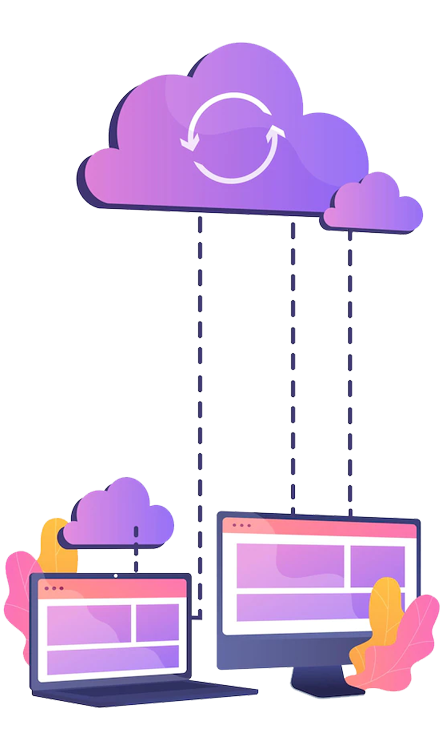


The technique of employing a network of remote servers hosted via the internet to store, manage, and process data as opposed to hosting it locally is referred to as "cloud computing." Utilizing someone else's infrastructure and hardware is the essence of cloud computing, which lowers the amount of capital investments a company must make.

You could argue that SaaS launched the movement toward cloud computing by proving that IT services could be made available online. Analysts today view SaaS as one of several subcategories of the cloud computing business, despite the fact that SaaS companies did not use the term "cloud" to describe their solutions at first.

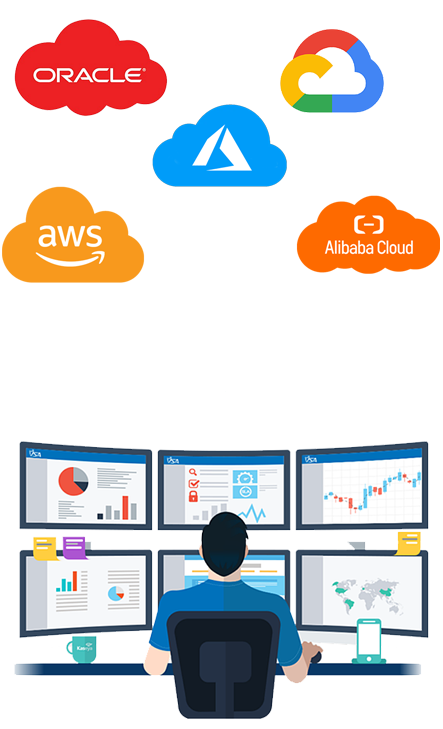
Software-as-a-service, infrastructure-as-a-service, and platform-as-a-service are the three main divisions of public cloud services. SaaS, or software as a service, is a well-known term for software that is supplied online. Platform-as-a-Service refers to a compute-and-software platform that enables developers to create and deploy Web applications on a hosted infrastructure, whereas infrastructure-as-a-Service refers to remotely available server and storage capacity.

Technically, any application can be stored in the cloud. But that doesn't make it a wise choice. For example, there isn't much of a purpose to run a desktop disc defragmentation or systems analysis tool in the Cloud since you want it installed on your desktop and with minimal to no delay. More crucially, businesses are unable to deploy specific Cloud-based apps due to regulatory and compliance issues, especially when those applications deal with sensitive consumer data. IDC surveys show the top uses of the Cloud as being IT management, collaboration, personal and business applications, application development and deployment, and server and storage capacity.

The first step in creating a cloud strategy is defining your technical and business goals. Recognize the motivations behind your company's move to the cloud, as well as the solutions these motivations call for. Your cloud strategy may be to start small and gradually, or your business may be in a position to dive right in. Once you identify your needs, you can better understand if your cloud strategy should include public, private or hybrid cloud solutions. Lay out a road-map and timeline to execute your shift to the Cloud.

Many companies don't spend enough time thinking about the preparations they might need to do before switching to the Cloud. The majority of the time, getting ready to switch to the cloud is straightforward and only needs that you delegate the move to a Cloud Service Provider. Your network bandwidth is one of the most important things to think about, though. With the strain put on local internet connections from cloud computing, you may consider upgrading your bandwidth or investing in SD-WAN technology to increase connectivity.